Dongmen: the Shenzhen that came first
Bryan Wang
· 4 min read
Every story about Shenzhen starts the same way: fishing village, forty years, skyline. It is a good story and it is mostly true, but it skips a place. Dongmen was a market town when the towers were paddy fields — the name is literally the east gate of the old Shenzhen market — and it never stopped being one. While Futian built the CBD, Dongmen just kept selling things.
So this is the district to walk when the glass towers start to blur together: the old downtown, pedestrianised, loud, dressed in pagoda roofs and fairy lights, and completely uninterested in impressing you the way the skyline does. It impresses you the other way — by being exactly what it has always been, at volume.
What Dongmen actually is
A tangle of pedestrian streets in Luohu, a few minutes from the Hong Kong border, with its own metro stop and no obvious edges. Locals call it Laojie — “the old street” — and the metro stop is named after it, which settles any argument about which part of town was here first. The buildings wear traditional eaves over modern retail — the district decided decades ago that the old-town look was worth keeping, and committed. Even the McDonald’s got a pagoda roof, and that branch is a piece of history in its own right: when McDonald’s came to mainland China in 1990, this is where it opened first. Queues went around the block. Locals still navigate by it.
Come for the walk, not for a list of shops — the shops turn over too fast for lists. The permanent inventory is the street itself: clothing markets stacked floors deep, milk-tea counters every fifty metres, calligraphy and phone cases and wedding photography, and the snack streets that are the actual reason to be here.
Eat your way down the middle of it
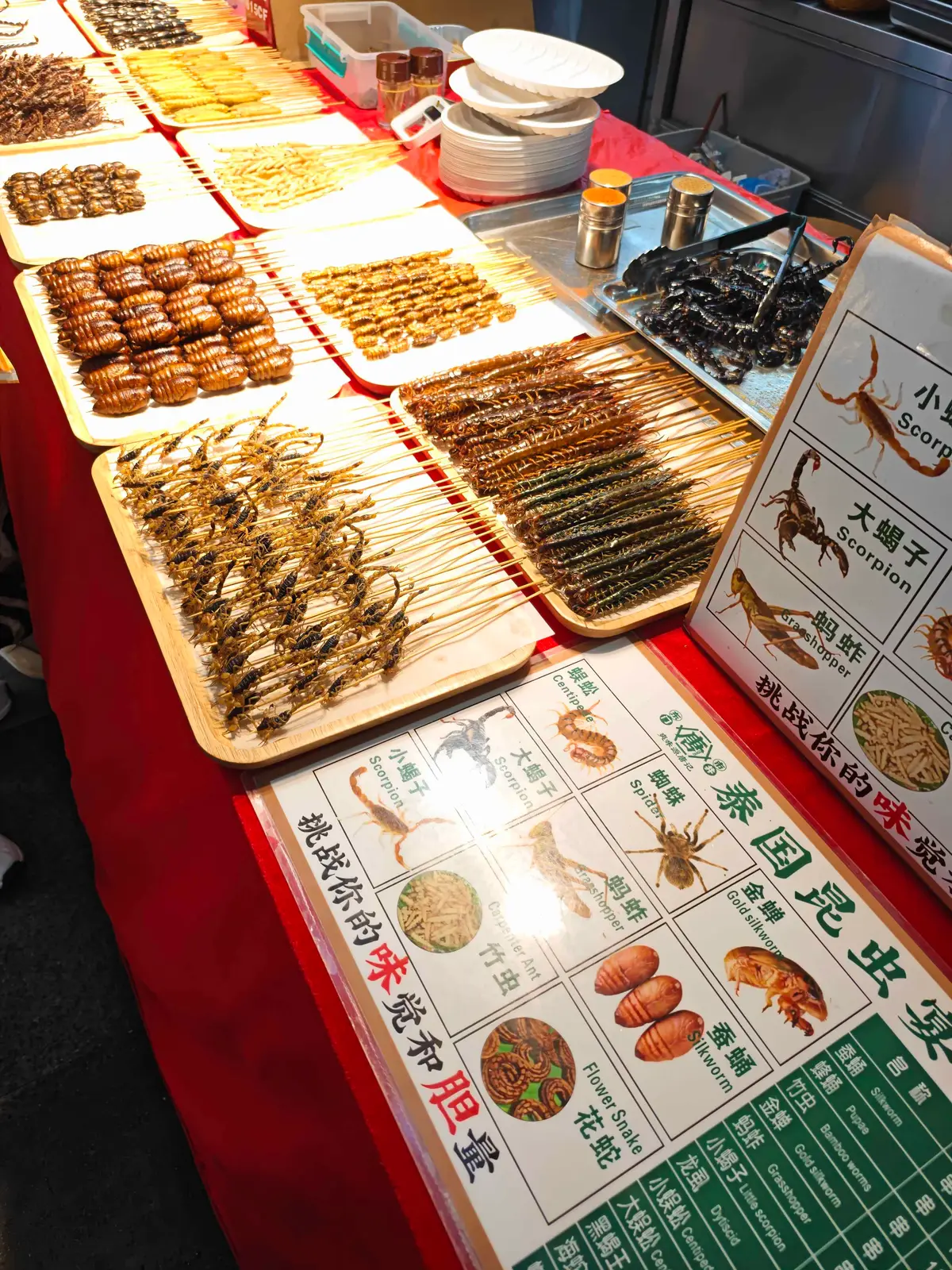
Dongmen eating is a moving meal: nothing sit-down, everything in sequence. Skewers off the grill, rice-noodle rolls, curry fish balls, whatever fruit is in season pressed into a cup. The rule we use everywhere in this city works hardest here — eat where the queue is, at the hour the queue forms. A stall with a self-translating menu and scorpions on sticks is a photo stop; the stall beside it with a fifteen-person line of teenagers is dinner.
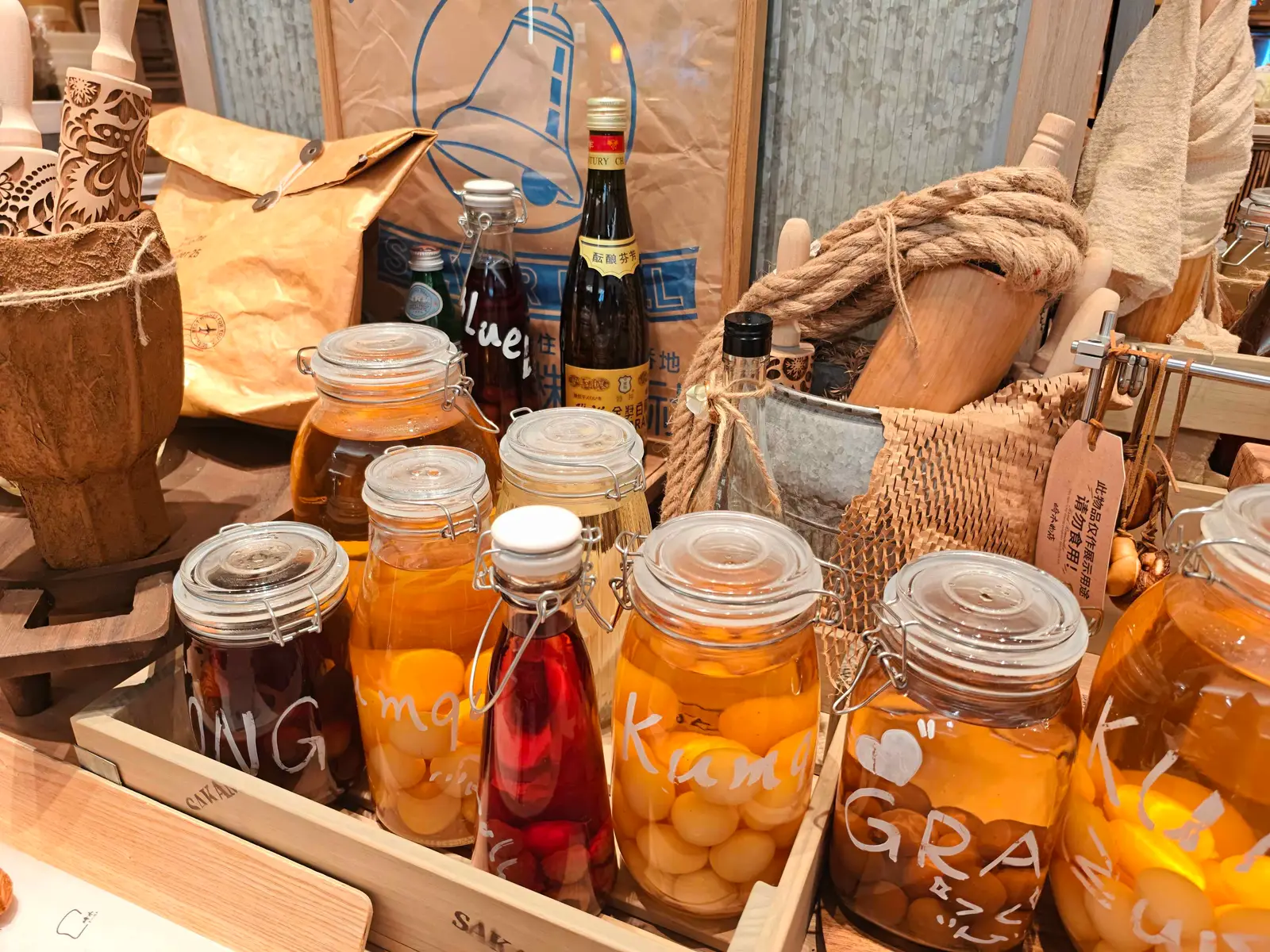
In between the grills are the older trades: preserved fruit in hand-labelled jars, dried goods, herbal tea counters that have outlived every fashion around them. What any of it is, and which of it you should actually eat, is the subject of our food guide — and ordering across the language gap is half of why our Dongmen Laojie walk exists. The other half is knowing which queue is worth joining.
Go at the right hour
Dongmen keeps shop hours in the morning and comes into itself in the evening. Late afternoon into night is the district at full signal: the eaves light up, the snack streets hit their stride, and the crowd becomes the attraction — school groups, dating couples, grandmothers doing the actual shopping. If your evening is already spoken for by the skyline, that is a fair trade; we wrote up that version of the night too. But Dongmen at nine in the evening is the older city making its counter-argument.
- It is a pedestrian district with its own metro stop, one easy line change from the border crossings — you do not need a car, and a car could not get in anyway.
- Everything is paid by phone, including the smallest skewer stall. Do the payment setup in our border-crossing guide before you come hungry.
- Bargaining exists in the clothing markets, not at the food stalls. Snack prices are posted and honest; pay what the board says and keep the queue moving.
Futian is the Shenzhen that got built. Dongmen is the Shenzhen that was already here.
The skyline will still be there at sunset. Give the old downtown an afternoon first: walk in without a plan, follow the longest queue, and let the district do what it has done for a few hundred years — sell you something worth eating.
Common questions
What is Dongmen in Shenzhen?
The city’s old downtown — a pedestrianised market district in Luohu that grew out of the original Shenzhen market town, centuries older than the skyline. Today it is clothing markets, snack streets and traditional-roofed shopping streets, a few minutes from the Hong Kong border.
When is the best time to visit Dongmen?
Late afternoon into evening. The district runs ordinary shop hours in the morning and hits full stride after dark, when the eaves light up and the snack streets are busiest.
Is Dongmen worth visiting?
Yes — especially as a counterweight to the CBD. It is the part of Shenzhen that predates the special economic zone, and the best street-snack grazing in the city. Go hungry, follow the queues of locals.
How do I get to Dongmen?
Ride the metro to Laojie station — named after the district itself — an easy trip from the Hong Kong border crossings. The streets are pedestrian-only. Set up mobile payments before you arrive — even the smallest stalls are phone-paid.
Was the first McDonald’s in China really in Dongmen?
The first McDonald’s in mainland China opened in this part of Shenzhen in 1990, and the pagoda-roofed branch on the pedestrian street remains a local landmark people still navigate by.
Bryan Wang
Co-founder · lives in Shenzhen
Grew up in China, spent eight years in Canada, back in Shenzhen now. Writes the posts about getting into the city because he does the trip both ways more often than he would like.
Read next
By interest
What Shenzhen actually eats
Nobody's grandmother is from Shenzhen. That is the best thing about eating here — the whole country cooks in one city. Where to start, dish by dish.
By interest
Shenzhen after dark
Daylight is when Shenzhen works. At night the towers run light shows, the late tables fill up, and the markets keep going. An evening, done properly.
Have a local show you around
Matched on what you are actually into, not on a fixed itinerary.
Have a local show you around